Learn Arabic Calligraphy from zero.
A year of weekly calligraphy practice, corrected by hand, one Saturday at a time.
30 live sessions · 17 October 2026 to 19 June 2027 · Saturdays 19:00 Istanbul · Small group
Now running. Enrolment for 2026/27 is closed.
Why this course exists
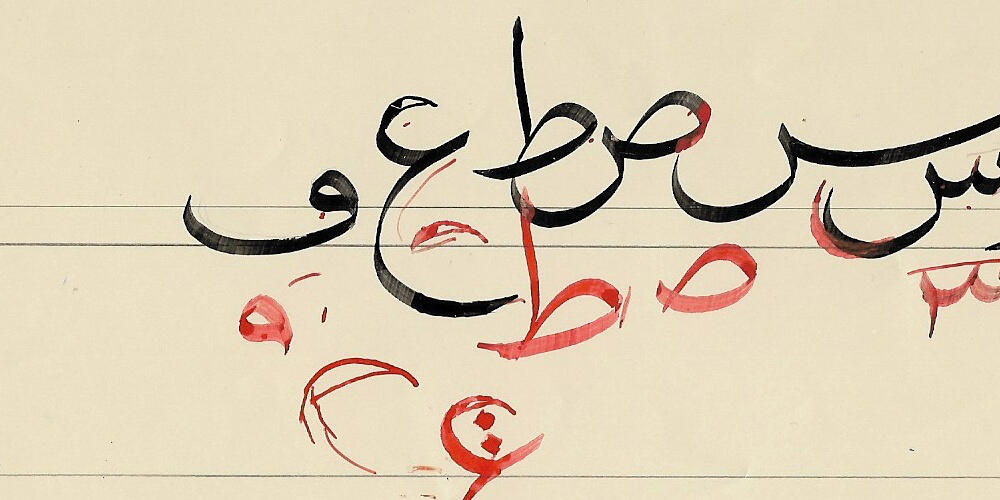
If you want to learn thuluth in English, you have two options right now.You can enrol at an institution, where you will be one of many and your teacher will change from term to term. Or you can teach yourself from videos, which is how most people start and how most people stop.What is missing in both is the thing that actually teaches the hand: someone looking at your page every week and telling you what is wrong with it.That correction is the whole tradition. It is what a teacher is for. Everything else is commentary.I trained that way in Istanbul, in a room, with a teacher marking my pages in red. This course is the same method, on a screen, in English.
How this art is actually learned
Calligraphy has never been taught from a book.
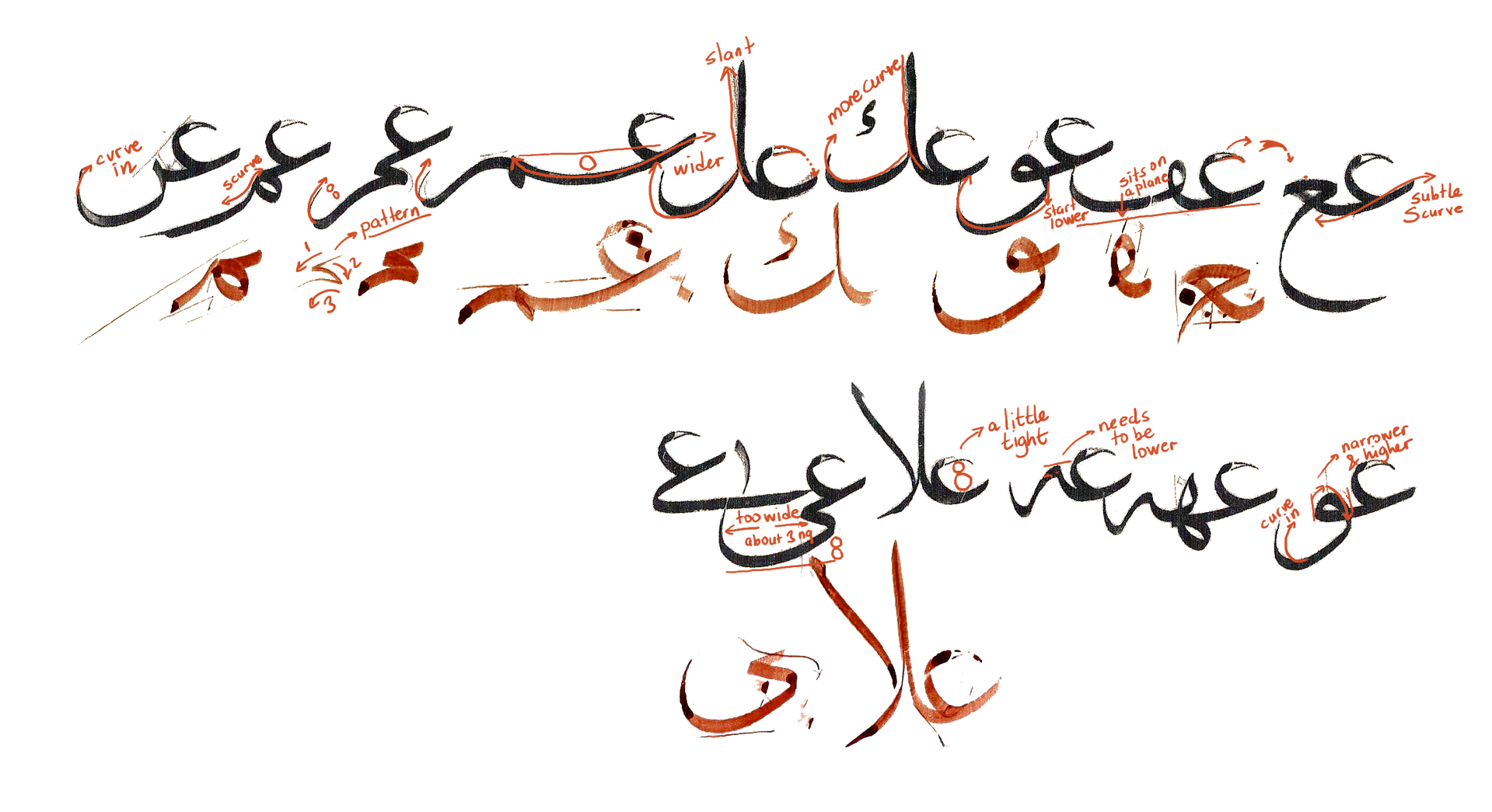
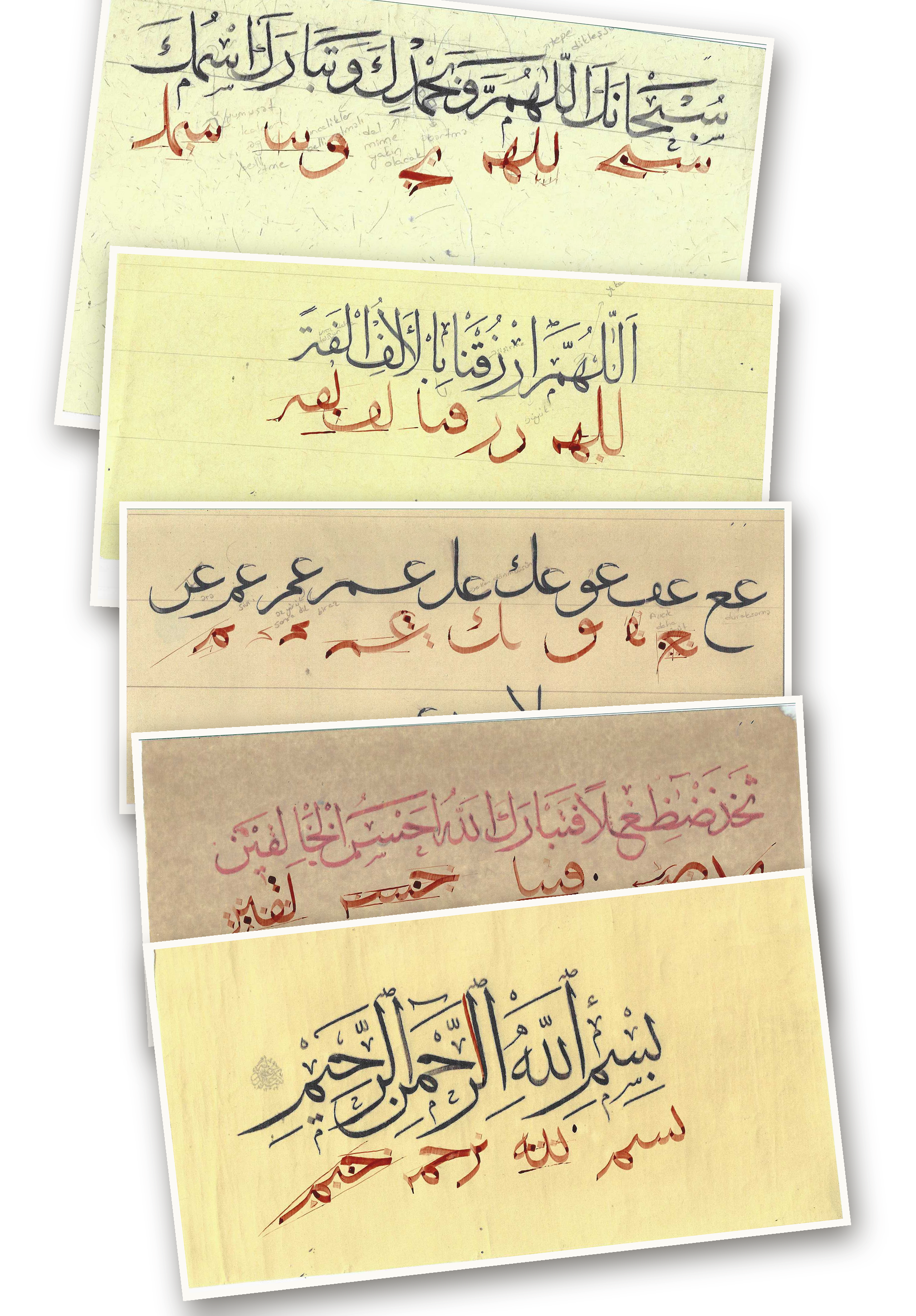
It is taught by copying. A teacher writes a line by hand, for you, at the level you are actually at. You take it away and fill pages with it. You bring it back, and it is corrected. Then you receive the next line, or the same one again.The Arabic word for this is mashq (مشق), and it names both halves at once: the model written by the hand of the teacher, and the labour of copying it until your hand yields.
The correction is the part that cannot be replaced. You can usually see that your letter is wrong. You cannot see why, and you almost never see it early enough. A teacher looks at the page and knows within a second which of the fifteen things you did is the one that matters.Without that, you can spend a year making the same mistake beautifully.
This is why the tradition is a chain and not a library. Every calligrapher writing today learned from someone who learned from someone, and what was handed down was never information. It was a corrected hand, and a standard the eye had been trained against. That is what the licence to sign your work, the ijazah (إجازة), certifies: not a course completed, but a hand judged ready by the hand that trained it.You cannot download that, and you cannot reach it alone, because the thing you are missing is precisely the thing you cannot yet see.
None of this has changed. What has changed is the room.Your page reaches me as a photograph, my correction goes back to you on a screen, and the sheet I write for you is written with the same reed pen (قلم) and the same ink it always was.
What the year looks like
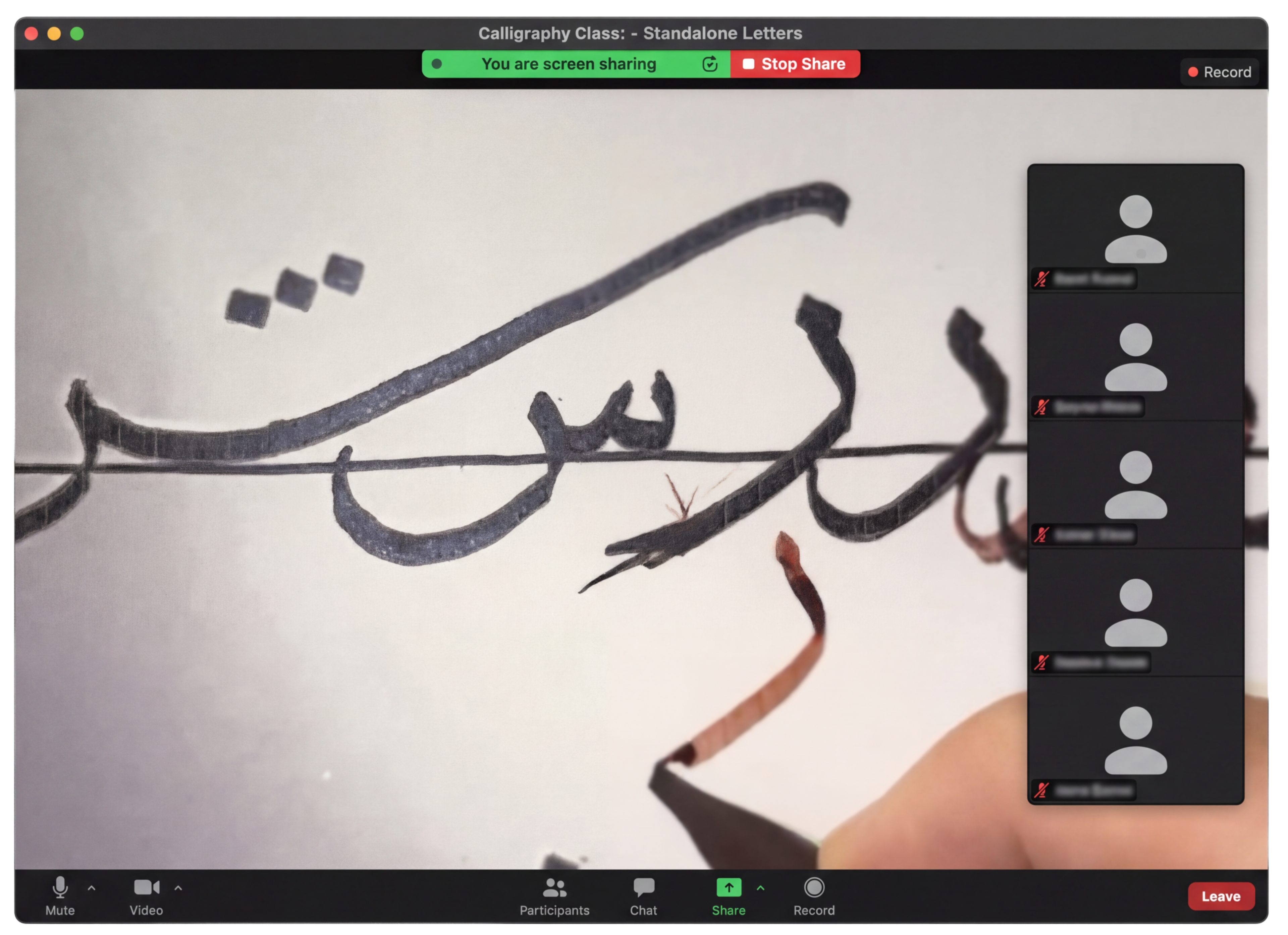
◆ 30 live sessions, ninety minutes each, on Zoom◆ Every session recorded and yours to keep◆ Your own work every week, corrected by hand◆ A written curriculum, that takes you from the reed pen through the alphabet◆ 17 October 2026 to 19 June 2027,with a four week break for Ramadan◆ Saturdays, 19:00 Istanbul time◆ A small group. You will not be a number in a hall
How a week works
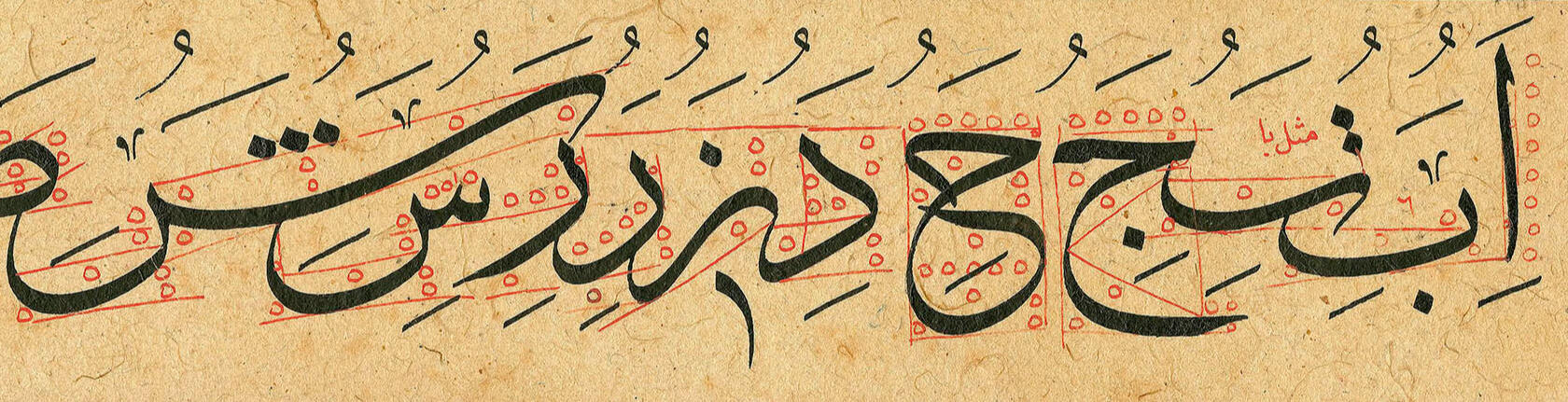
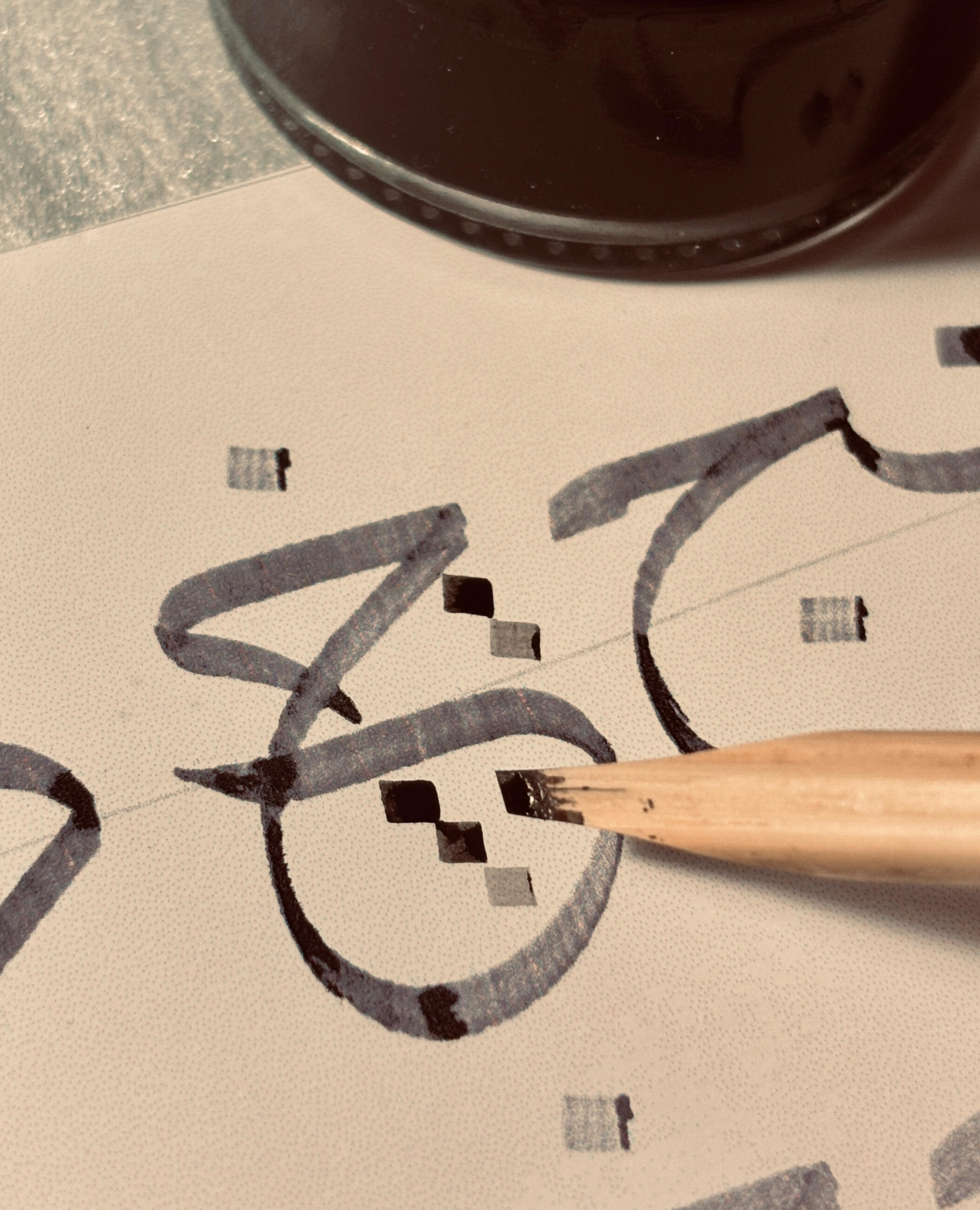
We work from a meşk murakka written by Mehmed Şevki Efendi, one of the finest hands of the nineteenth century. You are not copying an exercise sheet. You are copying the same pages calligraphers have copied for a hundred and fifty years.
01
The session
We take the line and work through it: the letters in it, their measure in rhombic dots, how each one changes where it meets the next.Then I write the line live while you watch, so you see the pen move rather than a finished page.
02
Your Week
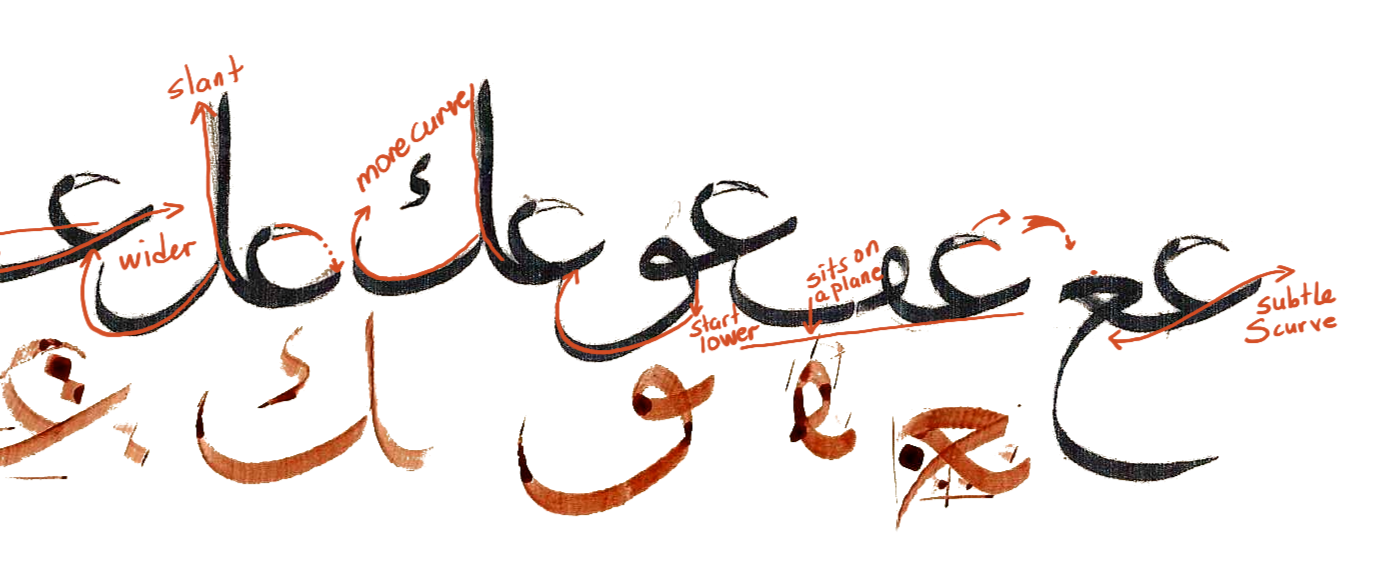
You take that line home and fill pages with it. Three or four hours, spread across the week.This is where the learning actually happens, and it is the part no video can do for you.
03
You send it to me.
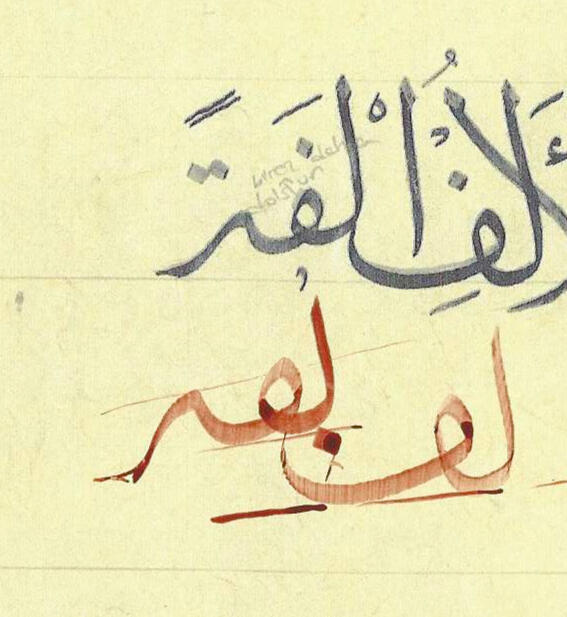
Photograph your best attempt and send it before the next session.Not your neatest page. The one you have questions about.
04
The Correction
I mark it in red and we go through it together in the second half of the session. Then I decide what you work on next. Sometimes it is the same line again.This is meşk, and it is the whole method.
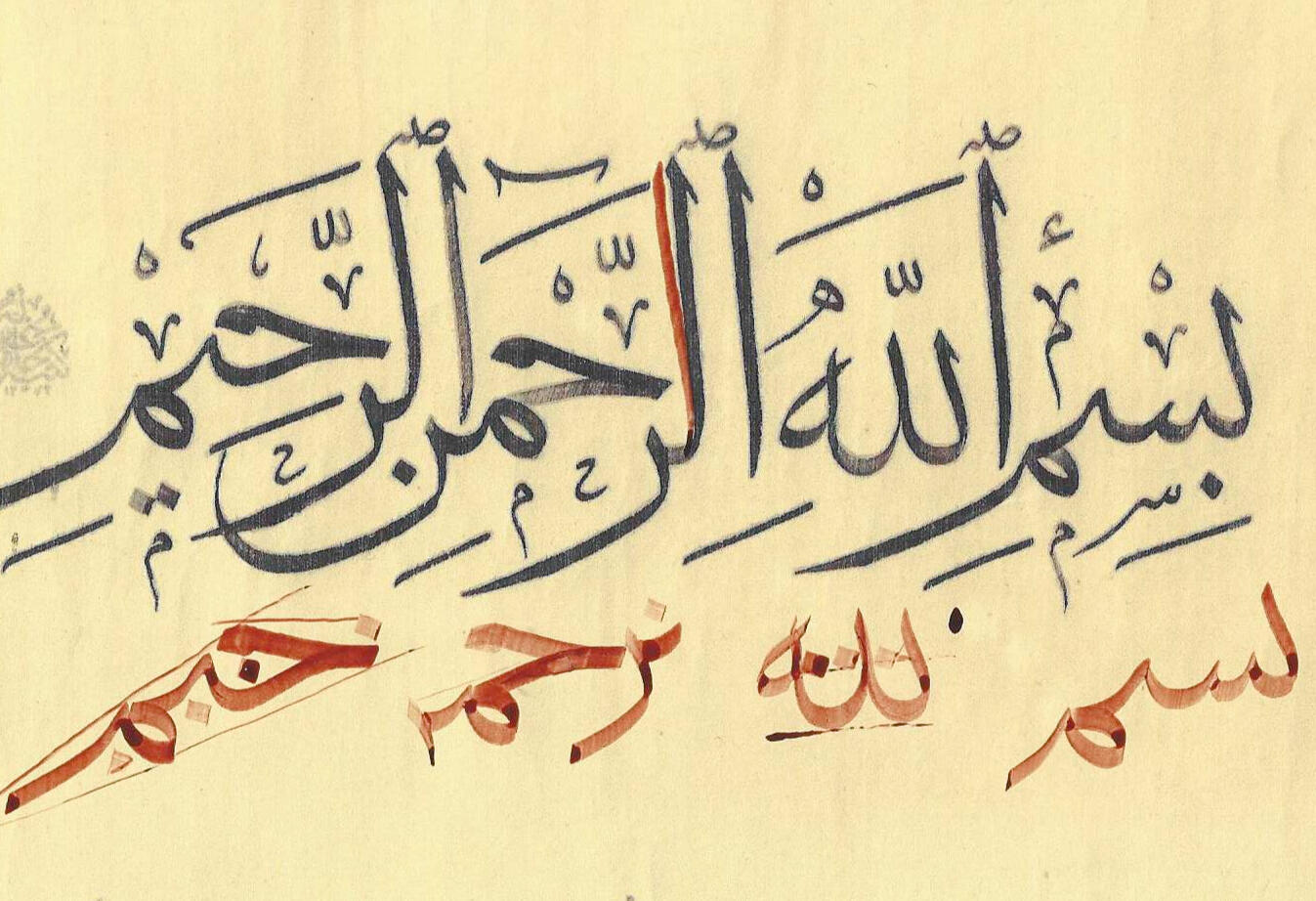
This is not the course being vague about the syllabus. It is the syllabus. Nobody is moved forward before they are ready, and nobody is held back to keep the group tidy.
Where the year takes you
Autumn. The reed pen, the ink, the paper, how you sit. The dot, and the system of measure built on it. Your first letters.Winter. The alphabet begins, letter by letter, in the order the tradition teaches it. Some lines take a week. Some take a month.Spring. The letters that are left, and the first combinations. Two letters meeting properly.Early summer. Joined letters, and your first words sitting on a line.How far you actually get by June depends on your hand and your hours. Some of you will finish the alphabet and be well into the combinations. Some will still be working on the harder letters in May, and that is normal. It is not a sign that anything has gone wrong.What I can promise is narrower than what you may have been offered elsewhere. Nine months of weekly correction, and a foundation laid the way it has been laid for five hundred years. Not a finished composition, and not a licence. Composition is years away, and anyone selling it to you in a first year is selling you something else.
Your instructor
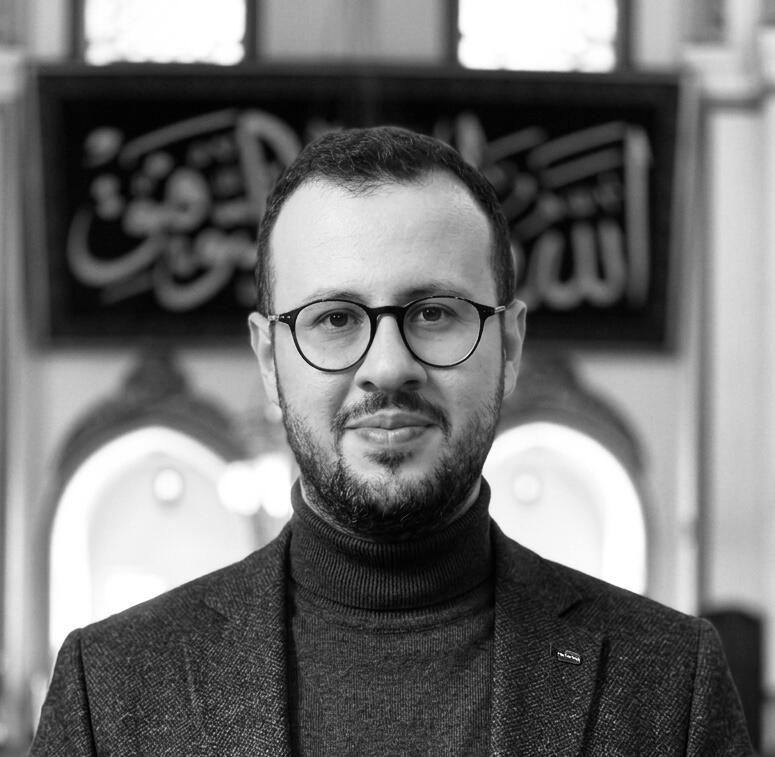
Yasin Giray Demir is a professional calligrapher trained in the classical Ottoman tradition, holding an MA degree in Traditional Islamic Arts. With over 8 years of specialized practice in the Thuluth script under master calligraphers, his work deeply explores the craft, history, and rigorous discipline behind the letters. For the past three years, he has been sharing these insights with enthusiasts worldwide through his blog, Notes on Paper.As an educator with a decade of experience in English language teaching, Yasin bridges the gap between traditional Eastern lineage and modern Western pedagogy. Over the last 5 years, he has brought Islamic calligraphy to the digital space, virtually mentoring more than 100 students globally.This art is rarely taught in English from within its own lineage. That is the gap this course is meant to fill.
Enrolment
Enrolment is closed.
The 2026/27 year began on 17 October and the group is now full. Enrolment is for the full year, and places cannot be filled once the sequence has started, so there is no way to join partway through.The next year begins in October 2027. If you would like to hear when enrolment opens, write to me and I will keep your name on a list. No obligation, and I will not write to you about anything else.
Refunds. If the course is not what you expected, write to me before the second session and I will refund you in full. After that the place is yours for the year.Materials. A reed pen, ink and coated paper. I can send you a starter kit from Istanbul, or you can source your own. Full details below.
Istanbul 19:00 · Dubai 20:00 · Riyadh and Doha 19:00 · London 16:00 · Berlin and Paris 17:00 · New York 11:00 · Los Angeles 08:00Turkey does not change its clocks. Times elsewhere shift by an hour in late October and late March. These are winter times.
Before you enrol
This course is for you if:◆ You are starting from zero, or you have been practising alone and want direction
◆ You can protect ninety minutes on Saturday evenings for nine months
◆ You can put in three or four hours of practice between sessions
◆ You want the classical method, not a shortcut
You do not need:◆ To read or speak Arabic. You will learn to write the letters, and I will teach you what you need as we go.
◆ To be right handed. I have taught both.
◆ Any previous art training.
This course is not for you if:◆ You want a certificate at the end. There is none.
The ijazah, the licence to sign your work, takes years. It is given when the hand is ready, not when a term finishes.◆ You want to learn at your own pace on demand. This is a live group with a fixed hour.
◆ You are looking for a finished composition to hang by June.
Frequently Asked Questions
Do I need to know Arabic?
No. Plenty of calligraphers write beautifully in a language they do not speak. You are learning shapes and their measures.What if I miss a session?
Every session is recorded and stays with you. Send me your page anyway and I will correct it before the next week.Where do I get the tools?
I can send you a starter kit from Istanbul, or you can buy your own from a list I will send you. Write to me after you enrol.Can I keep up if I have never held a reed pen?
That is who the course is designed for. The first weeks are entirely about the pen, the ink and how you sit.How much practice does this need?
Three to four hours a week is enough to make real progress. Less than that and the correction has nothing to work on.Why is there a break in February?
The group takes four weeks off for Ramadan and returns after Eid.Can I join late?
No. The year is a sequence and each week builds on the one before, so a place cannot be filled once it has started. The next intake is October 2027.What happens after the year?
Students who finish are invited into the continuing group, which keeps meeting for correction with no new syllabus. I am not selling that here. I mention it because you should know this is the first year of something longer, and that most people carry on.
What You'll need
Three things, and none of them expensive. You do not need traditional or hard-to-source materials to begin.
1. A pen.
The traditional instrument is the qalam, a reed cut to an angled tip. Bamboo is another traditional option and a little more forgiving while you are starting out. For Thuluth, begin with a medium width, around 2 to 3 mm.If you prefer metal, use the angle-cut nibs made specifically for Arabic calligraphy. One note worth saving you the trouble: avoid flat-cut Western calligraphy pens such as the Pilot Parallel. The tip is cut straight across and does not suit this script.2. Ink.
No special ink is needed to begin. Inks sold for Arabic calligraphy will generally do. Two reliable alternatives are Schmincke Aero Color, an acrylic ink, or a Japanese sumi ink suited to calligraphy, around no. 17. Avoid thin, watery fountain-pen inks. They will not give you a clean line.3. Paper.
An inexpensive matte coated paper or a glossy paper works very well. What matters is that the ink sits on the surface rather than soaking in. Avoid rough, absorbent paper that drinks the ink and feathers the line.Traditional ahar paper is beautiful but genuinely hard to source. Treat it as an option only if you can reliably get it. It is not needed to begin.
Also Useful◆ Likka, a little raw silk placed in the inkwell to hold the ink and steady its flow
◆ An inkwell, or hokka, to keep the ink at hand
◆ A makta and a sharp knife, only if you decide to cut and trim your own reed
Where to find theseI can put a starter kit together here in Istanbul and send it to you, which is the simplest way to begin with the right tools rather than guessing. Write to me after you enrol and I will tell you what it costs, with shipping quoted separately.If you would rather source your own, a few suppliers ship calligraphy materials worldwide. The first two are makers I recommend personally. Check whether they ship to your country before ordering.◆ Karin Sanat — the widest range in one place: angle-cut metal nibs, reed, bamboo and java qalams, Thuluth beginner sets, Schmincke ink, papers. Also on Etsy.
◆ TiryakiArt — reed pens, inks, coated and ahar paper, inkwells, likka, makta, knives, books.
◆ Sehar Shahzad — based in the US, sources from Istanbul and ships within the US. The convenient option for students in America.
◆ Arcalliq — international range including ahar and glossy paper, qalams, inks, likka, makta, inkwells, and Thuluth model books.
◆ Finlan Calligraphy — based in the UAE, pens and inks with free worldwide shipping.
◆ Etsy — search "qalam reed pen set" or "Arabic calligraphy paper". Several makers ship internationally.The Schmincke and sumi inks are also stocked by most general art suppliers.For background on the traditional tools, calligraphyqalam.com is a useful reference. It is a resource, not a shop.
Let’s Connect
Still thinking it over? This art rewards patience and a considered choice. You can follow my work, hear updates about the next cohort, or see behind-the-scenes processes through my channels below.Have a question instead? Please write to me directly; I personally read and respond to every message.